
 The journey to buying your cruising boat is every bit as thrilling—and daunting—as casting off the lines for the first time. That’s why having someone like Captain Jay Williams in your corner makes all the difference. With a lifetime on the water, from running liveaboard dive vessels in the Bahamas to managing new builds in Italy and overseeing complex yacht projects worldwide, Jay brings uncommon technical expertise, calm leadership, and a deep commitment to his clients' best interests. His hands-on experience, problem-solving skill, and ethical approach ensure your purchase process is not only efficient and well-managed but also genuinely enjoyable as you take the next step toward your dream.
Captain Jay Williams
(305) 788-1121
About Jay Williams
Any visitor to Fort Lauderdale or the French Riviera sees them. They’re low slung, sleek, sporty machines that look fast sitting still. Often, you’ll see the owners dining alfresco, always dressed perfectly and eating gorgeous food. Stylish, swift and capable, with a James Bond vibe and a comfortable interior, the European Sport Yacht has formed many people’s idea of what a yacht is. Buyers are curious but wary of these sporty yachts.
Synonymous with wealth, the European Sport Yacht is a lifestyle machine that sends a clear message to everyone: “I’m stylish and have great taste, and I can afford nice things.” Fortunately for you, these boats are very accessible in the used marketplace, with competitive pricing that puts them in line with American and Taiwanese boats of the same size and age. If you’re yacht shopping, you can absolutely have one. With sizes from about 35 feet to a little over 100 feet, and with prices starting in the low $200,000 range for a good example, there’s a European Sport Yacht for you.
So, what are these boats? Are they any good? What about maintenance and resale? Are they as fast as they look? Why do almost all of them originate in Europe? How do I get one, and how much will it cost?
Origins
In the boom years after the Second World War, Italian shipyards that had been building military craft and fishing boats increasingly turned their hand to yachts. The margin was higher, and a growing luxury sector was snapping up boats quickly. In 1962, Riva Yachts introduced the Aquariva at the Milan Boat Show, and the future was clear. Italy would be building sport yachts.
The British soon followed, with a robust group of English yacht builders turning out competitors to the Italian boats and selling them both in their home market and into the Mediterranean.
James Bond escaped SPECTRE on an Italian sport launch in “From Russia With Love” amid a fiery battle along the Croatian coast, igniting a multi-decade association between 007 and yachting that continues today.
Today, Italian and British yachts still dominate the landscape, with some entrants from Spain, France, Poland and Turkey always vying for market share.
Things to look for
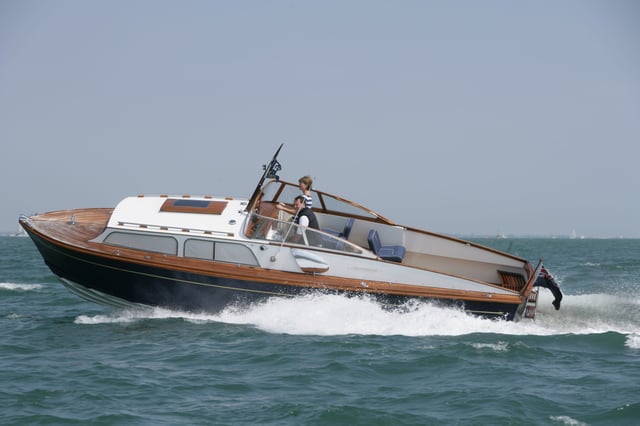
The unifying feature of all the European sport yachts is design. The makers spend the money to hire the best exterior and interior designers, updating the boats every few years and creating, rather than following, trends. As a result, these fashion-foward boats age unevenly. Some of them look obviously dated after a few years, while others shape the look of all boats for decades into the future and remain relevant themselves, becoming design classics.
Quality
The premium builders simply do the best work they can within their price point. New buyers of these boats often drive cars from Bentley, Ferrari and McLaren, and they have an expectation that, for the money they’re spending, their yacht will demonstrate similar quality. It’s common to see top-grade leather on interior seating, hand-finished wood panels, cut marble and other stones, top grade fixtures and appliances.
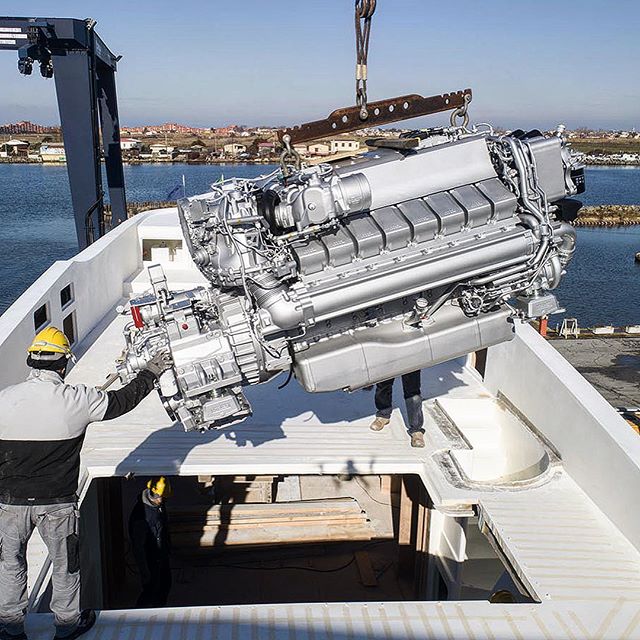
Engines come from a few premium suppliers, mostly European: Volvo is common in the smaller boats, up to about 60 feet, while MAN provides the midlevel power between 800 and 2000 HP. MTU, currently owned by Rolls Royce, anchors the top of the market.
Performance and Seaworthiness
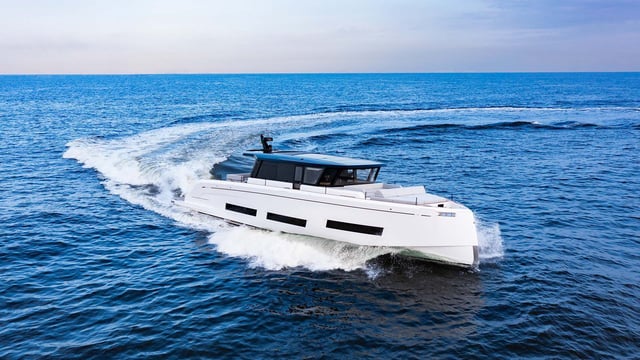
The Mediterranean is a unique cruising ground. It has directly informed many of the aspects of these boats: speed, range and seaworthiness. A fast boat can go from Tangier to the French Riviera in time for dinner. Most of the sport yachts have cruising speeds between 30 and 35 knots, with fuel range around 300 miles at these speeds.
Many people look at the low profiles of these boats and question their seaworthiness. How will they handle in a big sea? Fortunately for buyers, the Mediterranean is a very rough, nasty body of water. Seasonal winds have dictated trade in that area for the entirety of recorded history: the Mistral, Harmattan, Shamal and Levanter winds blow hard from different directions, whipping the Med into a frenzy. The bottom of the Mediterranean Sea is coated with shipwrecks.
The sleekness of these boats is not just for good looks. A close inspection will show that they are designed to handle rough water. They tend towards a deeper draft than a US designed boat, with a deeper deadrise, or “V” underneath, to slash through waves. Side doors close like submarine doors, with the expectation that they will be fully submerged. Exterior surfaces are designed to shed wave energy, while scuppers are very large to let that water back into the sea. Designed for high speeds in extreme conditions, sport yachts have a lot in common with military patrol craft. The low profile yields a low center of gravity, limiting roll. There may be no better fast sea boat than a premium sport yacht.
Near the dock, another set of capabilities become apparent: European Sport Yachts are very sharp handlers in close quarters. The builders tend towards very large props, for speed and performance, which also yield dividends when you’re handling the boat in a cross wind. The low profile again is helpful, reducing windage. Again, this is developed from the use conditions in the Med: often dockage is congested with a gaggle of boats against the sea wall. Incoming boats “med moor”, dropping an anchor, then backing towards the dock between the boats that are already there. Sharp control is critical to avoid a boat wreck. Huge deck cleats, chunky bow thrusters and windlasses for the stern lines are all common. Anchoring systems, as well, are usually oversized since owners anchor daily even when coming in to port.
All of these features add up to boats that are extremely capable in the US and Caribbean cruising areas. The speed and seakeeping make them great at crossing the Gulf Stream to the Bahamas or jumping from island to island, while the big mooring systems make short work of anchoring and handling dock lines in our less congested harbors.
IPS and other Pod Drives
Since about 2010, Volvo has steadily taken market share in these boats with the IPS system, a pair of pods beneath the hull that have counterrotating props. The pods themselves steer, using both a wheel and a joystick, allowing incredible maneuverability. Coupled with a bow thruster, an IPS boat can be shoehorned into seemingly impossible places. ZF introduced a pod drive for larger boats in 2013, which has since been discontinued. Cummins Zeus also released a pod drive system with mixed results. Today, the Volvo IPS is the dominant player in new European boats. After 15 years, the IPS system has proven robust, but it is maintenance-critical that owners take their boats out of the water annually and service the IPS drives. Some builders, like Ferretti, still rely on oversized shaft drives for ultimate durability and lower maintenance. Others, like Azimut, have adopted IPS everywhere they can.
Passarelles
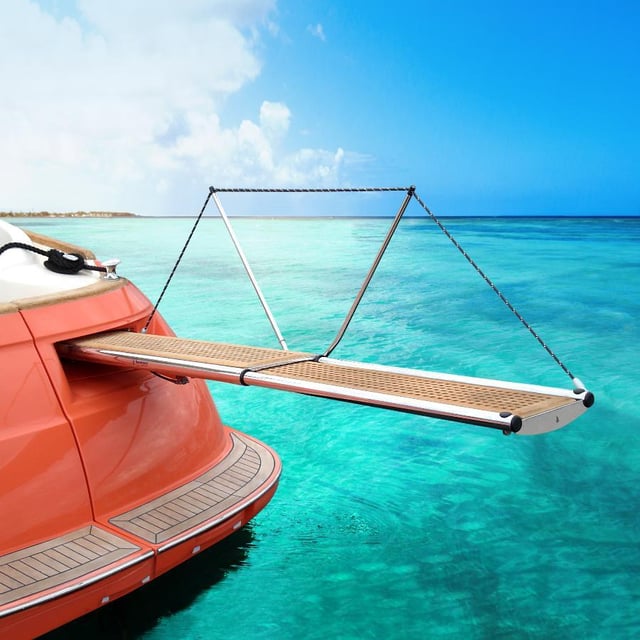
Since European cruisers often back up to concrete seawalls, med-mooring their boats, a device called a passarelle is often present. A passarelle, in this application, is a hydraulic gangway that extends from the back of the boat to the dock. The best ones have teak grating for traction, stainless steel construction and even a hand rope that folds out on stanchions as it extends. These units are commonly stowed inside a little hatch that covers the end and are invisible until you want to use them. They are maintenance items, if you buy a boat with a passarelle you should put it on your schedule to operate it regularly.
Some passarelles also serve as cranes to lift dinghies out of the water and stow them on swim platforms, though this is becoming less common as articulating swim platforms take over. While they have limited in US floating-dock marinas, I have used them to ease passenger loading in marinas that have a lot of surge and fixed docks, providing a stable way to get onto the boat.
CE Categories
US boats are built to ABYC standards. American Boat and Yacht Council issues and maintains a set of guidelines for every aspect of boat construction, from the type of wiring connectors used to how plumbing connections are made. Participation in ABYC by US builders is voluntary.
In Europe, CE regulates these things with a series of tests and standards builders must comply with. In particular, CE rates a boat for the type of sea conditions the boat can be expected to handle. A Category A boat is rated for all oceans, all conditions, while a Category B boat is more limited in the weather it can handle. A Category C boat is for protected water only. CE also adjusts the category by passenger count, your boat might be a Category A with 8 people aboard, but with 18 it would drop to a Category B. Every builder is required to affix a placard near the helm listing the CE rating.
Interiors and Layouts
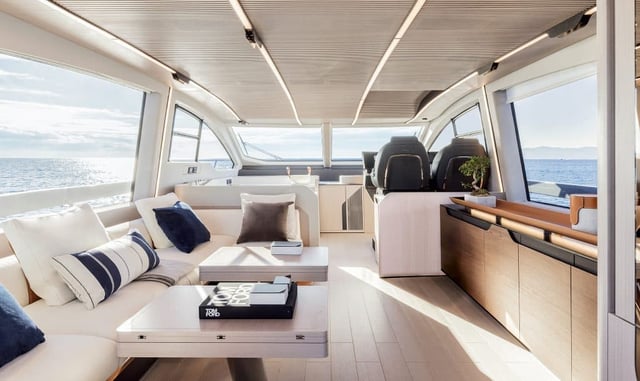
Euro Sport Yachts work a little differently than US boats on the inside. In most cases, there will be an inside helm station, for protection from that nasty Mediterranean weather. Galleys tend to be a little more compact, with smaller refrigeration, than US built boats; the European customer eats out often in the ports they visit. Designed for socializing, you’ll find very large main social areas, cockpit and flybridge seating. Downstairs, the master stateroom is usually very large for the size of boat, with a couple of side cabins for kids or guests. 4 stateroom layouts are popular over 60 feet, with a double bunk in the bow and a full-beam master amidships. Crew quarters (again mostly over 60 feet) tend to be very compact, with a small crew head and space to sleep.
Machinery Installations
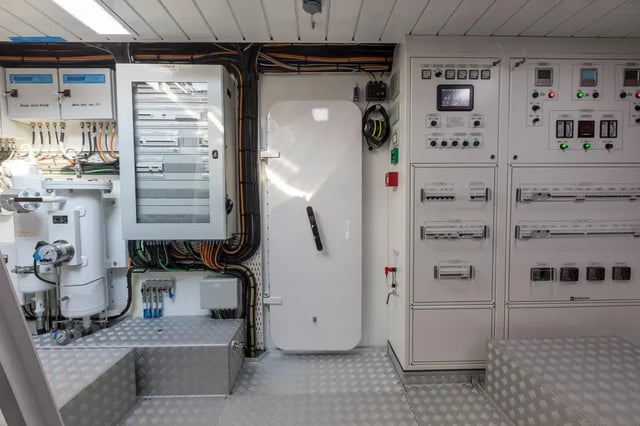
One of the most common questions I field from shoppers is “Aren’t they terrible to maintain?” In general, no. The quality of the machinery and associated parts is mostly very high. The low profile of the boats can mean tighter access to some areas. Like any product, various manufacturers prioritize different things: one might spend a lot of money under the decks on machinery, while another is buying quartz countertops and cut stone bar tops with that money for more flash.
One significant area of difference is plumbing. The fresh water systems are very similar to US and Taiwanese boats, but the saltwater plumbing, particularly thru-hulls, valves and seacocks, need watching. There’s significantly more salt in Florida and Caribbean water than in the Med, leading to greater electrolysis rates. The thru-hulls that the European builders use are of a different design, often just threaded standpipes with valves on top of them, rather than a Groco-style seacock. These decay more quickly than the silicon bronze material we use Stateside. I recommend to any buyer of a European boat that they budget for an upgrade of their saltwater metals as soon as the boat is out of warranty.
Quality, Stylish Materials
Nobody makes stainless steel like the Italians. Their steel is lustrous, tough and easy to care for. Likewise, many European builders use very heavy fiberglass construction to handle the Mediterranean’s weather. European gel coat has changed over the years, mostly due to environmental regulations on VOC emissions; with that said, if maintained, the gel coat on these boats is thick and easily polished. In British yachts, it’s not uncommon to see Connolly leather and Wilton wool carpeting, like a Rolls Royce. Some builders offer palettes of materials that have been selected by design houses like Loro Piana, Hugo Boss and Armani. Fairline Yachts is a standout in materials, using the custom palettes and very good quality leather, wood and fabrics. Their interiors tend to age well as a result.
One thing to look out for is “blushing”. In the early 2000s, regulations forced a change in the interior high gloss wood finishes that European builders were using. This material has not stood up as well as others; over time the finish absorbs moisture, particularly when boats are left with the air conditioning off in a hot, damp climate like Florida. This results in the finish looking cloudy. Boats with blushed surfaces are very difficult to fix, unless the owner has the interior wood painted. They can also be extremely good buys for people who don’t care all that much. It’s not structural, just cosmetic. This is mostly a problem with the high gloss finishes. Newer boats have moved to a matte finish on interior wood.
Teak, commonly used for decks, has consistently gotten more expensive. In order to maintain the luxury feel of teak and still meet their budgets , some builders have resorted to very thin veneers of teak decking, which does not age well and may need replacement in some pre-owned boats. An exception to this is Astondoa Yachts of Spain, who have one of the world’s largest stashes of aged Burmese Teak in their warehouses.
"I've heard terrible things about electrical systems..."
This is an interesting topic! Things have gotten better with time. The older the boat, the more likely it is that it’s not fully US compliant. European boats deservedly earned a reputation for terrible electrics back in the 1980s and early 1990s, and buyers have long memories.
The difference comes down to the type of power that we use in the US and that used in Europe. Here in the US, most household power is 120v, cycling at 60Hz. In Europe, the household power is 240v, cycling at 50Hz. That’s why you need to carry a power adapter for a trip to France. While it’s easy to split 240v power down to 120v, the rate of the pulse in the power causes the problems. Effectively, the cycle of European power is about 20% slower than in the US. So, anything that operates on that pulse, like electric motors, will be forced to operate 20% faster on US power than it would in Europe, leading to accelerated wear.
When European boats started coming to the US in bulk, in the early 1990s, the builders were just splitting the power to 120v and ignoring the Hz. This led to lots of failures. By about 1998, “US Spec” boats became the norm, built with US specific electrical parts. For the most part, if a boat is US spec, it’s also easy to source replacement parts for repairs.
On the DC electric side, everything is the same as in the US, so there won’t be any problems.
The quality of the European electrical installers’ work is normally very good. Connections are properly sealed, wires are correctly run. Generally speaking, the newer the boat, the better and more US-compliant the electrical system will be.
Gray Market Boats
There are quite a few non-US spec boats kicking around on the market in the US. They are easily identifiable by the European outlets. Owners of these boats have to do a couple of things to make them work: first, they need to invest in power converters for the outlets, like you’d bring on that Euro trip. More importantly, in order for shore power to work, they need to invest in a frequency converter system that will allow the boat to run on US shore power without burning things up.
Gray market boats can be a great buy, since you have to do some front end work to make them functional; the down side is you’ll pay when it comes time to sell. Occasionally, we find a desirable boat in Europe and import it.
Recognizable European Sport Yachts
There is a lot of variety in European Sport Yachts, more than I can list here. I’ll start with the most recognizable names, then at the end I’ll toss in some interesting alternatives.
Azimut
Arguably the most recognizable brand in yachting, Azimut is a very large company. They build boats from the 40 foot range all the way to over 120 feet. Producing boats in 54 shipyards in Italy, Azimut also built boats in Brazil for several years, specifically for the Florida market.
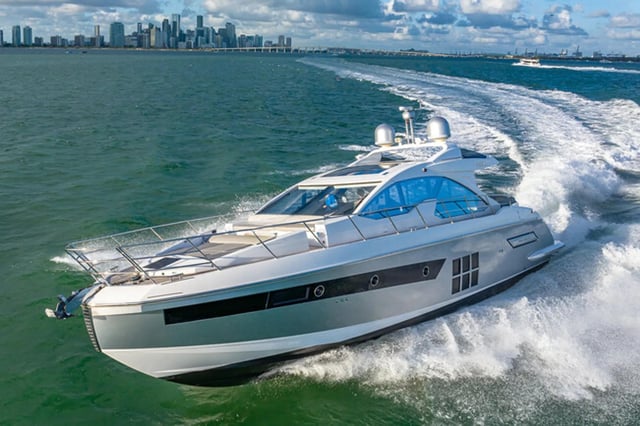
- Priorities: Azimut wants to produce the flashiest boat in the competitive set. Azimut has always understood that the perception of luxury is the key to their market. Azimut boats are design-forward, with yacht design luminaries like Stefano Righini penning many of their boats. Azimut unquestionably drives the design language of the entire market.
- Lines: Along with the main Azimut line, there are three other notable boat lines within the Azimut family. Atlantis builds high performance sport boats, while Magellano builds long distance voyaging boats that are tuned for long range and comfort at sea. Benetti is Azimut’s superyacht division, building world-class large yachts in Viareggio.
- Value Retention: Azimut’s strong brand and good quality materials yield good residual value. Because some of their designs are so aggressive, individual models can suffer on the used market. Others remain relevant for decades and carry their value well.
- Used Boats Standouts: The “S” series of express cruisers age very well. Their design language is modern without being challenging. A brilliant layout in the master stateroom makes the boats feel bigger when you sleep aboard. Magellano boats are robust and well made, built at the Magellano shipyard. Boasting capabilities like a trawler plus a surprising speed range, these are robust and tough cruisers.
Ferretti Group
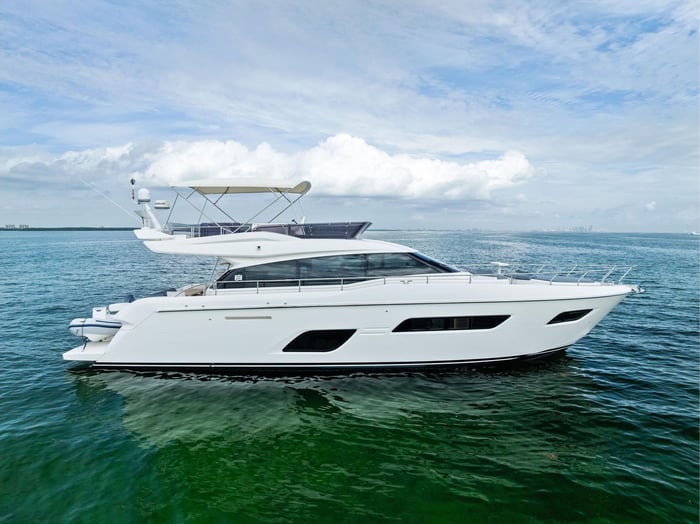
- Priorities: Ferretti Group’s highest priorities are sea-keeping and engineering. Located primarily on the Adriatic coast in Fano and Forli, Ferretti has a strong focus on robust engineering and materials. Ferretti boats are more of a “quiet luxury” choice than some of the alternatives.
- Lines: Ferretti, Custom Line (larger boats), Navetta, a voyaging boat; Pershing, ultra high performance; Mochi Craft, a Downeast boat alternative; Apreamare, a traditional Italian yacht that has never been a big US success.
- Value Retention: Ferretti’s conservative designs and focus on quality help their boats with good residuals. Their brand is very strong as well. It can be very difficult to age a Ferretti, they’re timeless. This adds up to a good picture for a buyer.
- Used Boat Standouts: The Ferretti 55 from the most recent generation is a stunning, modern machine with great engineering. The mid-60-foot boats are also fantastic, offshore-worthy boats with a dash of style and quality. For a traditional European yachting experience on a budget, the Ferretti 80 built from 1998-2004 offers one of the best values on the market and crew space for 3. Arguably one of the best sea boats of its generation, the 80 is deep, drawing 6.5 feet at the tip of the props.
Prestige
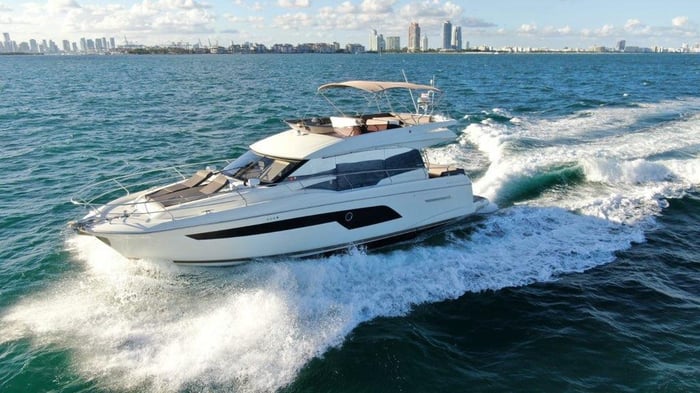
- Priorities: The outlier in this group, Prestige is focused on value. Owned by Beneteau Group, Prestige offers a lot of bang for the buck: great design, materials that are tested in one of the industry’s only automotive-style product testing labs, entirely pod-drive construction. Their boats are lighter than the competition, yielding better fuel efficiency from low weight and pod drives. Prestige boats are built in France.
- Value Retention: Prestige boats often experience sharper initial depreciation than some of their more-bespoke competition, but they tend to level out earlier due to the great durability of the materials. At about the 8 year mark, a Prestige is holding a similar value to an Azimut of the same size and age. In the long run, a Prestige is a great value.
- Used Boat Standouts: The Prestige 52 is an outstanding family boat. Offering huge accommodations, good fuel efficiency and a friendly design, these boats with their Volvo IPS power are fantastic coastal family cruisers. While the 52 doesn’t offer the bulletproof build of a Ferretti, for most people it’s a viable competitor.
Princess
Another British builder, Princess first came to the US as a partner to Viking, eventually breaking out on their own. Known for a good balance of luxury, seakeeping and performance, Princess boats are all-rounders.
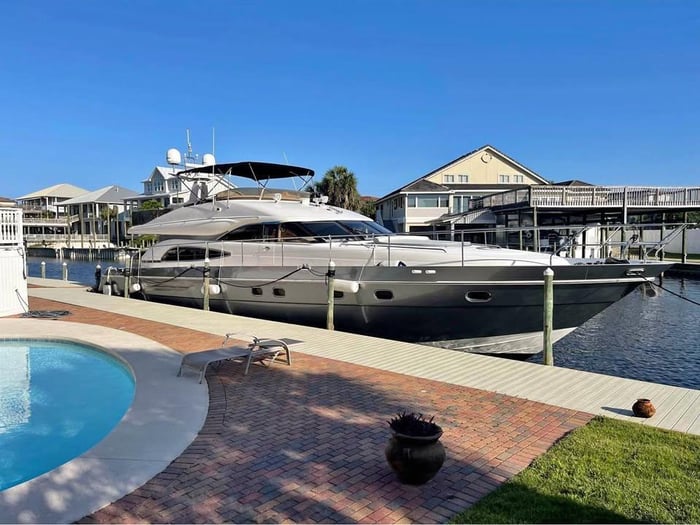
- Priorities: Princess has a focus on materials and comfort. Never the flashiest boat at the dock, a Princess is more “quiet luxury”.
- Value Retention: With a good reputation for build quality and customer service, Princess boats command high prices in the used market. They’re consistently in demand. This leads to strong residuals.
- Used Boat Standouts: The early Viking Princess models, built from 1998-2006, have stood the test of time and are holding together beautifully. Princess’s “V” line of express cruisers have a devoted following for their sporty handling and comfort.
Fairline
Smaller than Princess and Sunseeker, Fairline, also British, has had a bumpy road over the past decade, with several different owners. Fairline has built boats from 35 to 78 feet; their inland location makes it difficult to do anything bigger. In-the-know buyers and owners prize Fairline’s attention to detail and very fine materials. Known for their handling at sea, a Fairline is a more exclusive choice.
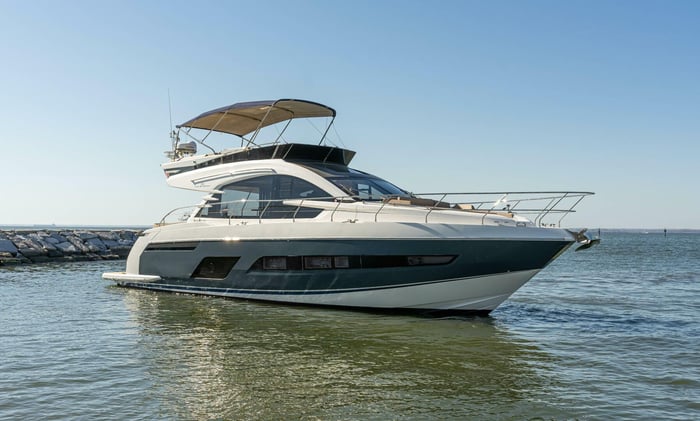
- Priorities: Fairline has always put an emphasis on interior quality and great materials, usually producing bats that are a cut above their competition. Fairline hulls are also outstanding in rough water.
- Value Retention: With quality materials supporting the used prices, good design that ages well and a solid group of owners who maintain their boats, Fairline yachts hold value well. A maintained Fairline is a good value proposition.
- Used Boat Standouts: The 74 and 78 Fairline yacht offers truly fine offshore handling, a robust build and a beautiful interior at a very reasonable buy-in for a boat of this caliber. The 42 Squadron feels like a custom-tailored Savile Row suit, sharp and clean everywhere. For sport boat enthusiasts, a Fairline GT is an express with a Bentley-grade interior.
Less-Known European Sport Yachts
Adjacent to the big makers are many European sport yacht builders that don’t sell a lot of boats into the US, or simply produce small volume. They lack the brand recognition of Azimut or Sunseeker; often as a result, a buyer can score a really good price on a fabulous boat from these builders.
Astondoa (Spain)
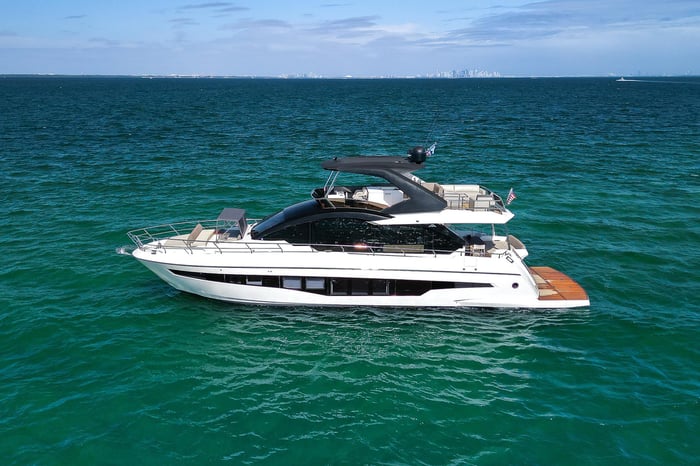
A truly large 100-year-old boat builder with a small US presence, Astondoa builds several models that are available in the US market. With a large stockpile of teak and the tooling to make all of their own interior wood panels and even their metal fittings in an on-site foundry, Astondoa has great quality control. Their residuals are lower than the more recognizable brands, resulting in some very good buys. Used Boat Standout: Astondoa 66: The 66 is one of the biggest boats of its length in the US market, offering 4 staterooms in 66 feet. With that small footprint and large luxury, the 66 is a Best Buy.
Baia (Italy)
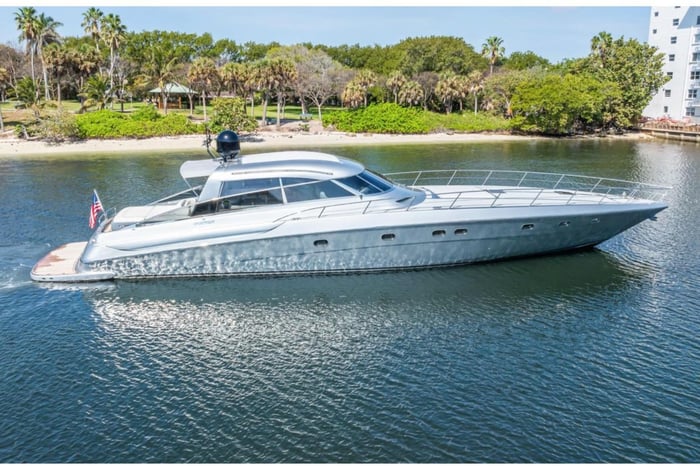
Want to go fast? Really fast? Consider a Baia. This small builder has always concentrated on performance above all else. Most Baia boats have Arneson surface drives and many are capable of speeds in excess of 50 knots. Interiors run the range from simple to superyacht luxurious. Used Boat Standout: Baia Italia 70: With a top speed of 55 knots, a truly beautiful interior and starship looks, the Italia 70 looks brand new every day. Prices for used examples are very reasonable for what you get. There aren’t too many Italia 70s in the US, you may have to ship one from the Med.
Mangusta (Italy)
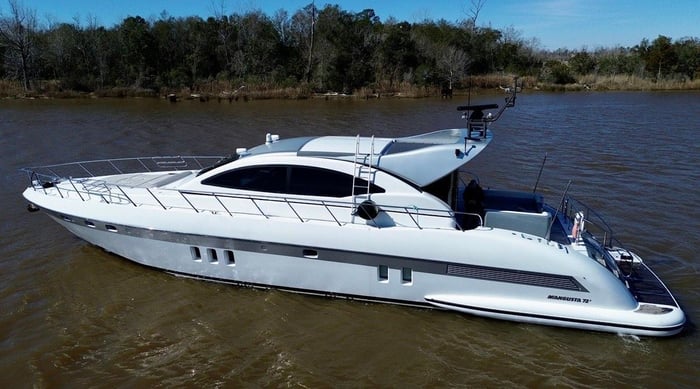
A smaller builder, Mangustas are low slung and swift. They tend towards large engines and higher speeds. Mangusta has had a long love affair with jet propulsion, particularly in their larger boats. Built in cooperation with Rolls Royce, the jet system is something to behold. Mangusta also sweats the details on machinery installations and interior materials, making them lovely boats to live with. Used Boat Standout: Mangusta 72: Offering timeless styling, a wonderful alfresco experience on deck and a beautiful interior, the Mangusta 72 is criminally undervalued in our market today. These are some of the most affordable quality pre-owned yachts. Owners tend to keep them up as well.
Sirena (Turkey)
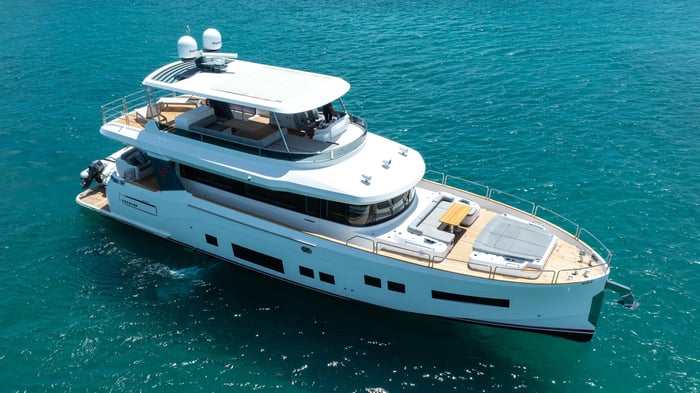
Offering a series of yachts that lean more towards the long-range end of things, Sirena Yachts takes advantage of their low cost labor force to build some of the nicest boats on the market. With a robust build, modern looks and a good turn of speed, Sirena is making a mark in worldwide yachting. Used Boat Standout: Sirena 64: With a handcrafted interior, great comfort and good materials, the Sirena 64 is a slam dunk for someone who wants go further and do more. Great systems installations, offshore comfort and modern looks all add up to a great buy.
Offshore CE70 (Taiwan)
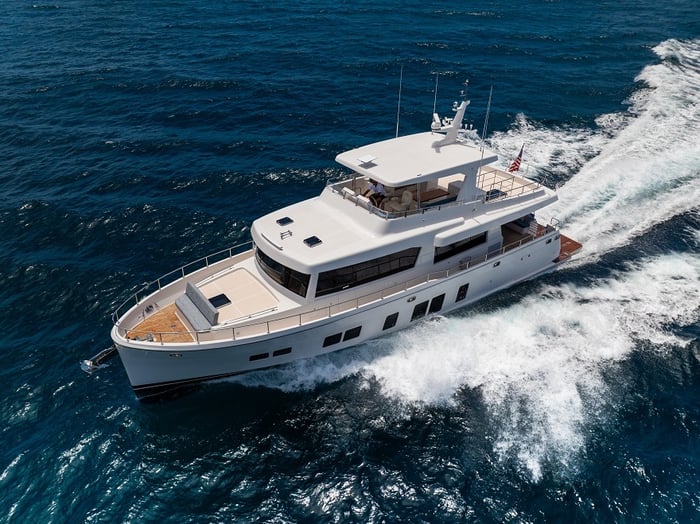
For the most part, the Taiwanese yacht builders have never been competitive with the Europeans in sport yachts. The CE70 by Offshore is a rare exception. Offering comfort, puality and performance, the CE70 is arguably the ideal choice for a buyer who wants style, comfort, craftsmanship, great materials and range. Offshore is known for their extremely robust construction and superb systems installations. With the CE70, for the first time, Offshore is competing with the Europeans on their own turf. Inquire with Jay Williams, David Walters Yachts, for a new build quote on a CE70.
Ready to go get your sport yacht? Partner with a broker who knows the boats and can help you understand the maintenance requirements. Think hard about what matters most to you: is it style, ultimate quality or speed? All of the boats do these things well, but each manufacturer has their specialty.




LEAVE A COMMENT