
 The journey to buying your cruising boat is every bit as thrilling—and daunting—as casting off the lines for the first time. That’s why having someone like Captain Jay Williams in your corner makes all the difference. With a lifetime on the water, from running liveaboard dive vessels in the Bahamas to managing new builds in Italy and overseeing complex yacht projects worldwide, Jay brings uncommon technical expertise, calm leadership, and a deep commitment to his clients' best interests. His hands-on experience, problem-solving skill, and ethical approach ensure your purchase process is not only efficient and well-managed but also genuinely enjoyable as you take the next step toward your dream.
Captain Jay Williams
(305) 788-1121
About Jay Williams
I was bitten by a shark in 2018, an accident that could have been fatal. I was in the Berry Islands, in the North Central Bahamas, a long way from help when the shark tore an artery out of my arm.
I survived to write this because although many things went wrong, some important things also went right. I was moderately well prepared, both emotionally and from an equipment perspective, to deal with a serious situation at sea. A portable VHF radio, a bolt cutter capable of cutting an anchor chain and the resourcefulness to fashion my own tourniquet were all players in my survival. Over the years, first as a ski patroller and later as a captain, I have received a great deal of emergency medical training and experience.
As Captain, I have dealt with many life threatening injuries among my passengers and crew, but this was the first time I got hurt and needed serious help. I’d like to offer a note of thanks to Doctors Hospital in Nassau, and Dr. Fitzcharles, for doing the work and taking the risks that saved my life. Thank you. This article is dedicated to you.
Being Prepared
When we’re cruising, the places we’re seeking are off the grid, purposefully. We want solitude, empty beaches and coves, nothing but the sound of the wind. This remoteness also requires self sufficiency. We stock extra impellers, oil, filters and tools for mechanical issues. Too often, though, medical preparedness is an afterthought.
There’s an aisle in West Marine that’s dedicated to safety: inflatable harnesses, flares, first aid kits. Too often, we grab the plastic box with the cross on it off the shelf, throw it in the cart, and call it done. This is what I had when the shark bit me. It was useless. I didn’t need a band-aid, Benadryl or Neosporin. I needed life-saving tech that was not present at all. These kits come in many flavors and prices, and they’re all pretty good for everyday cuts and scrapes. By all means, buy one as a starting point. If you’re cruising near the US, go with a mid grade kit. If you’re going offshore, spend for the best one you can find, or use a service to build you a custom kit.
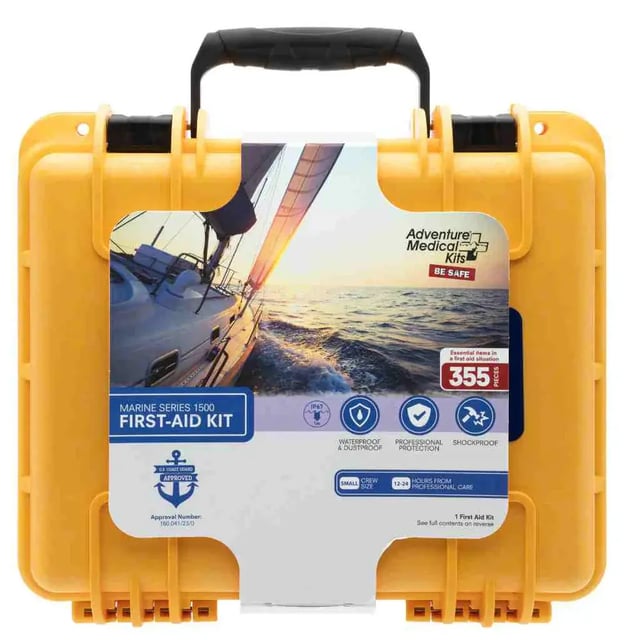
The Adventure Medical Kit 1500 is a good starting point. A standout is a tourniquet, the lifesaving item I lacked.
What To Bring Offshore:
IFAK Kit: If I had an IFAK, or Infantry First Aid Kit, I would not have come nearly so close to death. The IFAK was designed in collaboration with the military as a small, portable kit that would help with severe battlefield trauma. They usually contain a tourniquet, inflatable splint, notebook and pen for tracking vitals and some other useful small items. Priced around $60, adding one of these to even the cheapest medical kit dramatically upgrades its capabilities in a lifesaving situation. I don’t travel without one anymore. These are small, packed in a MOLLE pouch and easily stored.
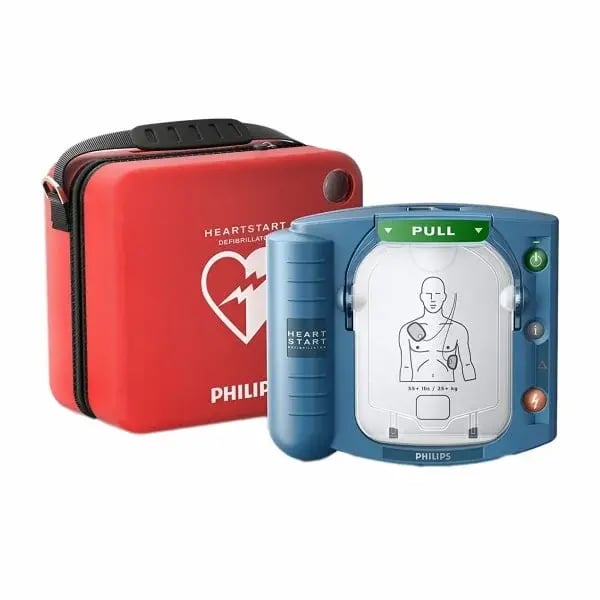
AED: When I was working on dive boats, an AED was the single most valuable medical tool we had. An AED, or Automatic External Defibrillator, is medical magic. On 5 separate occasions, I have hooked up the sticky pads on an AED to a patient who was undergoing CPR and brought them back to life. There are 5 people who lived more years because we were equipped with an AED on the Pirate’s Lady. If you’re traveling with people over 50 years old or SCUBA diving there’s simply no excuse for not having one aboard. An AED provides a medical assist that no other item can. In many cases during a drowning the heart stops. CPR can often help bring these victims back, but an AED is more effective. No matter your assessment of risk or heart health, an AED is critical safety gear. You can buy a refurbished one for as little as $500, while a new unit is around $1100 to start. While the Red Cross recommends AED certification along with CPR, the process is simple enough that almost anyone can use an AED in a pinch.
Other Items To Add:
-
Comprehensive first aid book, with pages (no time to get the Starlink booted up and do a Chat GPT search while someone is bleeding out)
-
List of prescription drugs for all passengers and crew, along with provider contact information
-
Pulse Oximeter, measures the oxygen saturation of blood. Fits on a finger. This is a great tool for assessing condition during an emergency, an oxygen saturation of under 90% is a problem.
-
Spares of lifesaving medication, like seizure meds or insulin
-
Combat gauze, a hyper-absorbent gauze that was developed for explosion injuries on the battlefield. It comes vacuum packed and expands when opened.
-
Chest seal for a tension pneumothorax
-
Hibiclens surgical soap
-
Stethoscope
-
Blood pressure cuff
-
Handheld VHF radio available and charged
-
Head lamp, with batteries, kept with first aid supplies
-
Eye wash kit, with sterile saline solution
-
Lots of sterile gloves
-
Hemostat/clamp, sterile
-
Very good pair of tweezers
-
Waterproof case for extra items
-
Rehydration salts in tablet form: these are available at sports stores as the base for electrolyte drinks. It’s amazing how many onboard injuries come from dehydration and electrolytes getting out of balance.
DAN membership: There are many insurance and medical policies in the world. DAN is one of the best. Divers Alert Network provides its members with physician consultation by phone in emergencies, medevac booking in most places, preferred rates at some medical facilities and quick response time in an emergency. There’s no substitute for a calm voice on the phone when it’s all going wrong.
The Three P's of First Aid
- Preserve Life: As a first responder to an onboard emergency, your first priority should be to preserve life. You may need to perform CPR, use an AED, stop bleeding or take other action to preserve the victim’s life. Start with C-A-B—circulation, airway, and breathing. Assess the quality of the victim’s circulation, adjust if needed. Ensure that the victim has no blocks to their airway and that they are breathing. The goal is to prevent the condition from worsening in any way.
- Prevent Deterioration: Do what you can to keep the victim in stable condition until medical professionals arrive. The goal is to prevent the condition from worsening and prevent any potential further injury. This may mean moving the victim to a safer location, applying first aid, stabilizing them, or just staying with the victim and providing comfort. In a maritime medical emergency, help can sometimes be an hour or more away. In the case of trauma or bleeding, the things you do in the minutes after the injury can make a huge difference in the outcome.
- Promote Recovery: After you’ve done what you can do with first aid treatment, your job now is to promote recovery. This can be done by encouraging confidence, providing comfort, attempting to relieve pain, and so on.
A Note on Sharks
Sharks get a bad rap. When Peter Benchley, the author of Jaws, was interviewed years after the movie, he expressed real regret about the hate of sharkshis movie had spurred in people. From commercial fishing bycatch to illegal shark finning, these ancient creatures are under terrible pressure as a species.
“The shark in an updated Jaws could not be the villain; it would have to be written as the victim, for worldwide sharks are much more the oppressed than the oppressors.”
Peter Benchley:
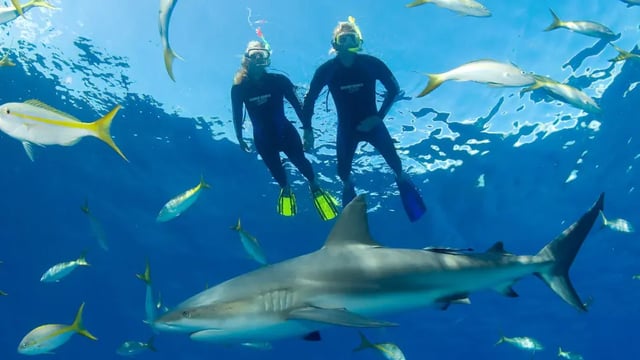
I have been fortunate enough to dive with sharks hundreds of times in the liveaboard dive industry. In 15 years, I never once missed a shark dive. They are beautiful, intelligent, sometimes goofy creatures that I’ll always carry a light for. Even after nearly dying from a shark bite, I’m a fierce advocate for sharks; almost every bite survivor is. I was simply in the wrong place, at the wrong time. Near death in Nassau, I had the thought: At least it was a shark, not a bus accident or cancer.
You’re in more danger of dying in a vending-machine incident than from a shark bite, and don’t even get me started on traffic fatalities. Please don’t be afraid to get in the water. I hope you’ll be lucky enough to see a nurse shark sleeping on the bottom in a sand channel, a reef shark cruising the coral or a Great Hammerhead out over the wall. That elemental thrill you feel near your heart? Cherish it. Our descendants may never experience it.





LEAVE A COMMENT